

Shake Proof – How to Stay Sane and Solvent in 2026 While Everything Else Rewrites Itself
The world is shaking in 2026 but your mind and your bank account don't have to shake with it. Here is what the latest global data says about staying happy and financially strong, told by someone who read all of it so you don't have to.
Tuesday, 11:47 pm. I was in bed doing the thing I swore I’d quit. Thumb flicking. War footage from a country I’ve never visited. A heat record broken somewhere else. A thread about which jobs AI eats next (mine was on the list, thanks for asking). And between all of it, an ad for a twelve dollar smoothie that promises calm.
I closed the app and lay there thinking about how strange 2026 feels. The economy is supposedly “resilient.” My group chat is not.
So I did what I do when my head gets too loud. I went digging through the data. January to September 2026. Happiness reports, OECD tables, UN labor numbers, climate assessments, AI adoption surveys. Hundreds of pages, so you don’t have to read them.
And here’s the thing nobody tells you. The research isn’t actually depressing. It’s a map. Because 2026 shows, with unusual clarity, exactly what breaks people and exactly what makes them thrive.
Let me walk you through it.

First, the shake is real and you are not imagining it
People say “the world is changing fast” and it sounds like a motivational poster. So let’s put actual 2026 numbers on the table.
- The global economy is growing at about 2.9 percent this year. Sounds fine, until you learn that real household income across wealthy countries grew just 0.2 percent in the first quarter of 2026, down from 0.6 percent the quarter before. The machine is running. Your wallet is standing still. That gap is why everything feels off even when anchors say “resilient.”
- Global inflation still hovers near 3.9 percent, quietly eating raises before they land in your account.
- Roughly 186 million people are unemployed worldwide, and progress on decent work has basically flatlined.
- The World Happiness Report 2026 found life satisfaction among young people in English-speaking countries and Western Europe has been sliding for a decade. Across nearly 50 countries, teens glued to social media more than five hours a day report sharply lower wellbeing.
- War keeps grinding people down. After 14 years of conflict, 46 percent of Ukrainians report poor mental health, and clinicians in Gaza describe psychosocial needs on a scale that defies ordinary vocabulary.
- And climate scientists now say the quiet part out loud. We are on track to overshoot 1.5°C of warming and spend decades trying to climb back down.
Read that list twice and it’s heavy. Read it once and it’s just… Tuesday.
But here’s the twist that kept me reading past midnight. Buried in the same reports are the exits. Not vague “practice gratitude” exits. Measured, replicated, boringly reliable ones.
The happiness research found something almost too simple
One of my favorite findings of 2026 comes from a 26-country study on climate adaptation self-efficacy. Fancy term, simple idea. People who believe “I can handle what’s coming” report higher wellbeing than people who don’t. In 26 countries. Not because their lives are easier. Because the belief itself is armor.
Psychologists have a name for the mechanism. Grandmothers have always had it. Competence calms the nervous system. You don’t need to control the storm. You need evidence that you’ve handled storms before.
The same literature keeps surfacing three other repeat offenders, in the good way.
Time outdoors lowers anxiety and lifts mood, and the effect shows up fast. Real-world social connection remains the strongest predictor of a good life, stronger than income past a certain point. And belonging to something local, a street, a garden, a crew, buffers almost every shock researchers throw at it.
None of this is woo. It’s the most replicated material in wellbeing science, and 2026 just added another stack of receipts.

Money in 2026 plays by new rules
Now the wallet half, because happiness with an empty bank account is a hobby, not a life.
The strange part of 2026 is that the macro numbers and the kitchen-table numbers got divorced. Global growth around 2.9 percent, unemployment steady near 4.9 percent. Meanwhile household income in the OECD crawled 0.2 percent last quarter. Translation: growth stopped feeding the people producing it as generously as it used to.
At the same time, money is visibly relocating.
- Firms that adopted AI are 8 to 31 percent more productive than firms that didn’t, per OECD data. That gap becomes wages, bonuses and hiring eventually. It just becomes them for the people who can work with the tools.
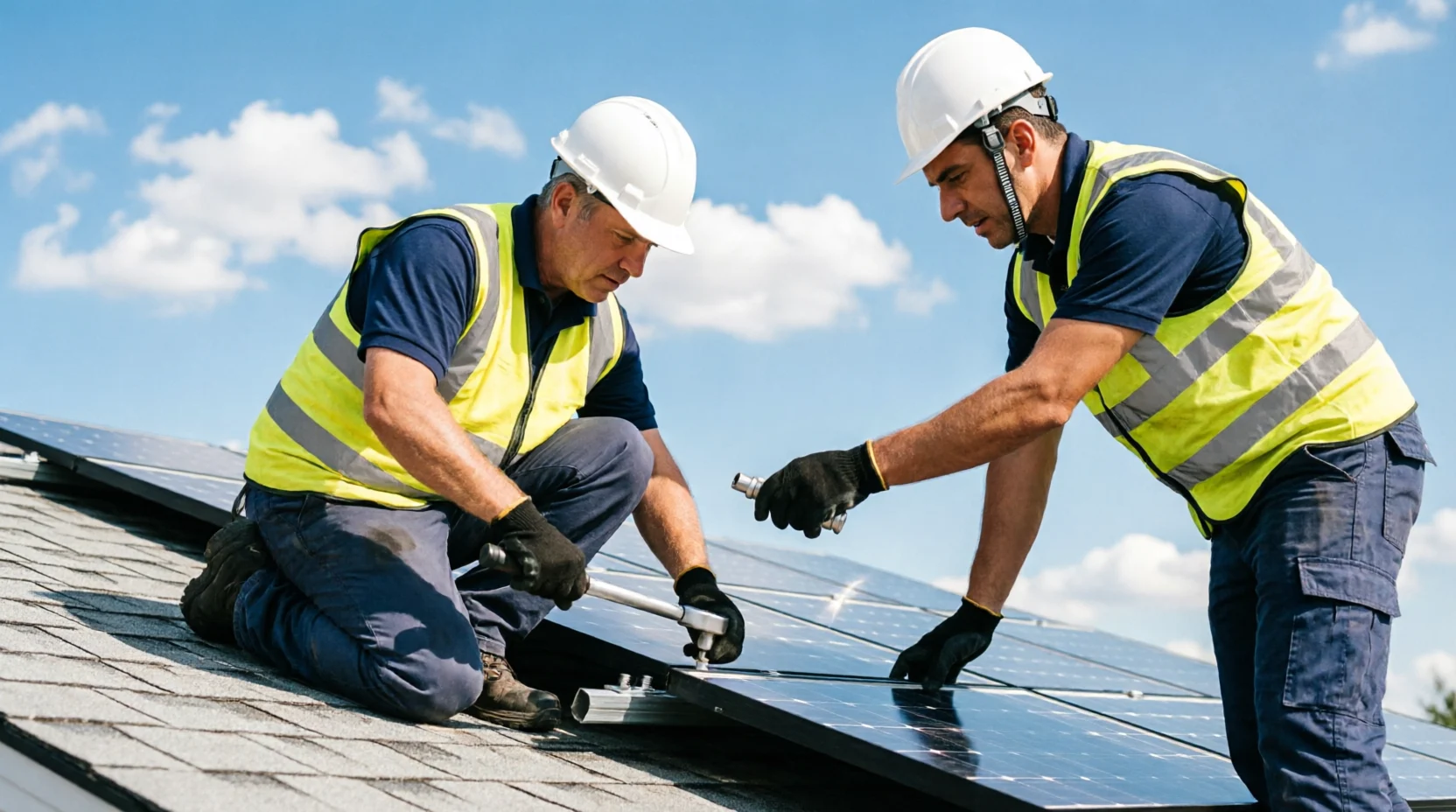
- The green economy is minting real jobs right now, not in brochures. Community solar alone, around 750 megawatts of projects, generated more than 14,000 local jobs and roughly 2.1 billion dollars in economic value, much of it flowing to households who could never afford rooftop panels of their own.
- More than 70 percent of companies now pour money into digital and AI tools just to keep supply chains alive through wars, tariffs and weather. Every one of those projects needs humans who can run it.
So the economic story of 2026 isn’t “everything is collapsing” or “everything is fine.” It’s this. The money changed addresses and left a forwarding note. The note says, sitting with the people who adapted.
AI is the roommate who redecorated without asking
Let’s be honest about the elephant.
A 37-country survey found more people expect AI to destroy jobs than create them. Sixty-nine percent of workers admit fearing AI-driven layoffs. Burnout and trust in employers are sliding in the same direction. If you’ve lain awake doing arithmetic about whether your job survives the decade, congratulations, you are statistically normal.
And yet. The same body of research shows AI isn’t deleting work so much as repricing it. Routine tasks get automated. Judgment, taste, coordination, care, and the ability to ask a machine the right question get more valuable every quarter. The UN even convened its first Global Dialogue on AI Governance in July 2026, because governments finally understand this is infrastructure now, like roads and electricity.

The people winning this transition treat AI like a very fast, very literal intern. They hand it the boring 40 percent of their job and spend the freed hours on the 20 percent that actually gets them promoted. The people losing sleep treat it like a verdict. Same tool. Different posture. Posture, it turns out, is a trainable skill.
The shake proof kit, seven moves the data actually supports
Enough touring the problem. Here’s the kit I built from the 2026 research, written the way I’d write it for a friend.
Move 1 – Defend the first and last hour of your day
The five-hours-a-day social media threshold in the happiness data is not a coincidence. Mood follows attention. You don’t need to delete everything. You need bookends. No feeds for the first hour after waking, none for the last hour before sleep. The wellbeing gap between heavy and light users is one of the largest measurable effects in the entire 2026 report.
Move 2 – Collect evidence that you can handle hard things
Remember adaptation self-efficacy, the 26-country armor? Build it on purpose. Once a quarter, learn one thing that makes the future less foreign. An AI tool for your field. A repair skill. A budgeting system. A first aid course. Each one is a deposit into the belief that keeps wellbeing standing when headlines wobble.
Move 3 – Prescribe yourself outside time like it is medication
Because functionally, it is. Time in nature reduces anxiety and improves mood, and 2026’s mental health literature keeps reconfirming it. Twenty minutes counts. A park counts. The tree-lined street counts. Don’t romanticize it. Schedule it.

Move 4 – Make AI your intern before it becomes your competitor
Pick one repetitive task this week and hand it to a machine. Meeting notes. First drafts. Spreadsheet cleanup. Email triage. Then protect what you do with the saved hour, because that hour is where learning, creating and connecting happen. The 8 to 31 percent productivity gap between adopters and non-adopters is mostly this habit, compounded.
Move 5 – Grow a second root
With household income growth at 0.2 percent, single-source dependence is the real fragility of 2026, not your latte habit. The second root doesn’t have to be a hustle-culture business. A skill rented out freelance. A stake in a community solar project that cuts your power bill. A certification in a sector that’s actually hiring, like green energy, care work or AI-adjacent operations. Small, steady, separate from your payroll.
Move 6 – Join something with a street address
Resilience research from conflict zones and climate-stressed regions keeps landing on the same hero. People who know their neighbors. Participatory local planning, community gardens, mutual aid crews, cleanup days. These aren’t cute extras. They’re the infrastructure that catches you when systems don’t. Bonus: they’re also one of the fastest cures for the helplessness the news manufactures.

Move 7 – Change your rulers
Governments are slowly admitting GDP was never a report card for human life, and the 2026 “beyond GDP” push now measures health, trust, clean air and life satisfaction alongside output. Steal the idea. Once a month, score yourself on four things. Energy, connection, learning, money margin. Watch which scores move. That’s your real economy.
The shake is the point
Here’s what I keep coming back to, somewhere past midnight, phone finally face down.
2026 isn’t breaking us. It’s asking us. Asking whether we’ll keep measuring life with a ruler built in 1950. Whether we’ll let our attention be rented to the highest bidder. Whether we’ll meet the most powerful technology we’ve ever built with panic, or with posture.
The data says people who answer those questions on purpose, with small repeated moves, stay happier and stay solvent through the shake. Not because they’re lucky. Because they built the kit before they needed it.
The world will keep shaking. That’s what worlds do. Your job was never to stop it.
Your job is to become the kind of person the shake can’t flatten. And maybe, while you’re at it, the kind who shakes back, gently, in the direction of something better.
Now if you’ll excuse me, I have a twenty-minute walk to go sit under a tree. Research purposes.
Numbers in this piece draw on the World Happiness Report 2026, OECD economic and household income updates, ILO World Employment and Social Outlook 2026, UN and UNDP adaptation and AI governance briefings, and peer-reviewed studies on climate anxiety and digital wellbeing published between January and September 2026.
Quick answers to what people actually type into search bars
Can you really be happy in 2026 with wars and climate change in the headlines
Yes, with an asterisk. Happiness in crisis years isn't a mood, it's a setup. Protected attention, real connection, evidence of competence, local belonging. People with those four report measurably higher wellbeing even in conflict-affected regions.
Will AI take my job in 2026
It will most likely take tasks, not titles. Risk concentrates in roles that are entirely routine. Opportunity concentrates in people who redirect AI output toward judgment and relationships. The 37-country fear is real, and so is the 8 to 31 percent productivity premium for adopters.
What is the cheapest first step to feel better this month
A walk among trees and one honest conversation with a friend. Both free, both replicated in the literature, both faster-acting than most people expect.
How do I protect my money when wages barely move
Margin over momentum. Automate a small savings line before lifestyle absorbs any raise, cut one subscription-tier habit, and open a second income root in a growing sector. Green energy and care work keep hiring through the turbulence.