
The climate phenomenon experts are calling a “jaw-dropping” event has officially arrived, and it is leaving historical models in the dust.
Months before its anticipated peak, the 2026 Super El Niño has already shattered the highest temperature ever recorded for the ocean-warming phenomenon. We are witnessing a massive redistribution of energy across the globe, supercharging the climate crisis and bringing unprecedented weather extremes to communities worldwide.
Here is a breakdown of why this “Godzilla-level” event has meteorologists on high alert, how it’s triggering states of emergency, and what it means for the global economy.
A Record-Shattering Temperature Surge
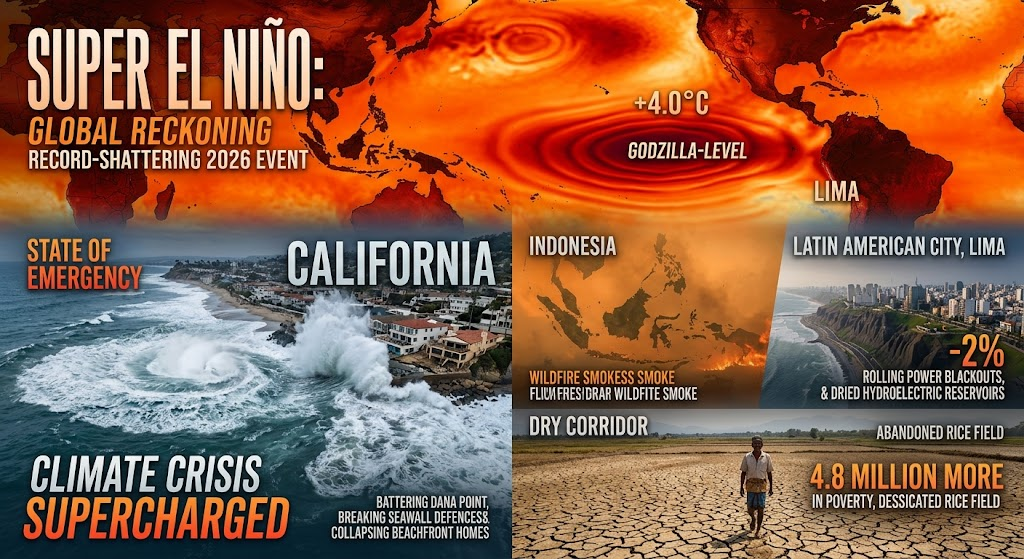
To understand the scale of what is happening in the Pacific Ocean right now, we have to look at the numbers. The latest data reveals that the temperature rise at the heart of this El Niño has hit 3.05°C above the 1991-2020 average.
This officially eclipses the previous modern record of 3.02°C set during the devastating 2015-2016 event. Even more concerning, climate models forecast a potential peak of 4.0°C by the end of the year. Anything above a 2°C rise is classified as a “very strong” or Super El Niño, making the current trajectory entirely uncharted territory.

This intense warming isn’t happening in a vacuum. It is piling extra heat into an atmosphere already warming rapidly due to human activity, setting the stage for 2027 to become the hottest year in recorded history.
California Braces for Impact
The west coast of the United States is already feeling the sheer force of this shifting climate pattern. Governor Gavin Newsom recently declared a state of emergency across California in anticipation of historic winter storms, extreme flooding, and devastating landslides.
El Niño traditionally fuels massive Pacific storms that batter the American west. With the 2026 event operating at unprecedented strength, coastal cities have already experienced severe high surf and coastal erosion. The emergency declaration aims to deploy the National Guard for search and rescue operations and shore up critical infrastructure before the worst of the winter rain arrives.

For residents, the message is clear. The state is preparing for potential neighborhood cutoffs, widespread power outages, and infrastructure damage that could dwarf previous extreme weather years.
A Global Economic Shockwave
The fallout from a Super El Niño goes far beyond dramatic weather footage—it fundamentally disrupts the global economy.
Latin America and the Caribbean are staring down a catastrophic financial and humanitarian crisis. The Economic Commission for Latin America and the Caribbean (ECLAC) recently warned that this extreme event could wipe out at least 2% of the region’s Gross Domestic Product over the next three years.

The human cost is equally staggering. Up to 4.8 million more people could be pushed into poverty by the end of the decade due to lost household income. The economic damage stems from a few critical pressure points:
- Agriculture and Food Security Massive droughts are threatening the Dry Corridor of Central America and northern parts of South America, destroying staple crops and driving up global food prices.
- Energy Grids With countries heavily reliant on hydroelectric power facing severe precipitation deficits, the risk of rolling blackouts during intense heatwaves is skyrocketing.
- Marine Ecosystems The warming of the Pacific halts the upwelling of cold, nutrient-rich water, devastating commercial fishing industries and causing mass coral reef bleaching.
The Climate Change Connection
El Niño is a natural climate cycle, but it is currently playing out on a heavily modified stage. Scientists are warning that anthropogenic climate change is amplifying this natural variability.
The baseline temperature of the Earth is now significantly hotter. When a massive El Niño sits on top of this elevated baseline, the resulting heat extremes, erratic rainfall, and agricultural failures are magnified exponentially. This double-whammy makes it increasingly difficult for governments to prepare and adapt.
The 2026 Super El Niño isn’t just a weather event. It is a loud, undeniable wake-up call about the fragile intersection of human activity and nature’s most powerful cycles.
You Might Also Like
 Climate & Environment
Why Governments Are Urging Citizens to Stockpile Food and Water Immediately
If you’ve noticed a sudden shift in the news lately, you aren’t alone. Stockpiling emergency supplies used to be the...