

Images: A Violent Shake Halts A Global Trade Route And Stops International Sports
When the earth ruptures at a shallow depth, the shockwaves ignore borders, toppling historic churches, freezing global shipping inspections, and trapping visiting athletes in lockdown.
Imagine sitting in your living room on a quiet Friday afternoon when the floor suddenly decides it wants to behave like the deck of a ship in a violent storm. That is exactly what happened to Rosendo Domínguez, a sixty-year-old resident in a remote rural province, when his kitchen items started flying off the counters. He wasn’t experiencing a localized anomaly or a passing heavy truck; he was sitting right near the epicenter of a geological event so massive that seismometers thousands of miles away initially registered it as an 8.0 magnitude monster before correcting to a 7.7. The violent shaking didn’t just rattle windows; it threw entire populations out onto the pavement in a matter of seconds.
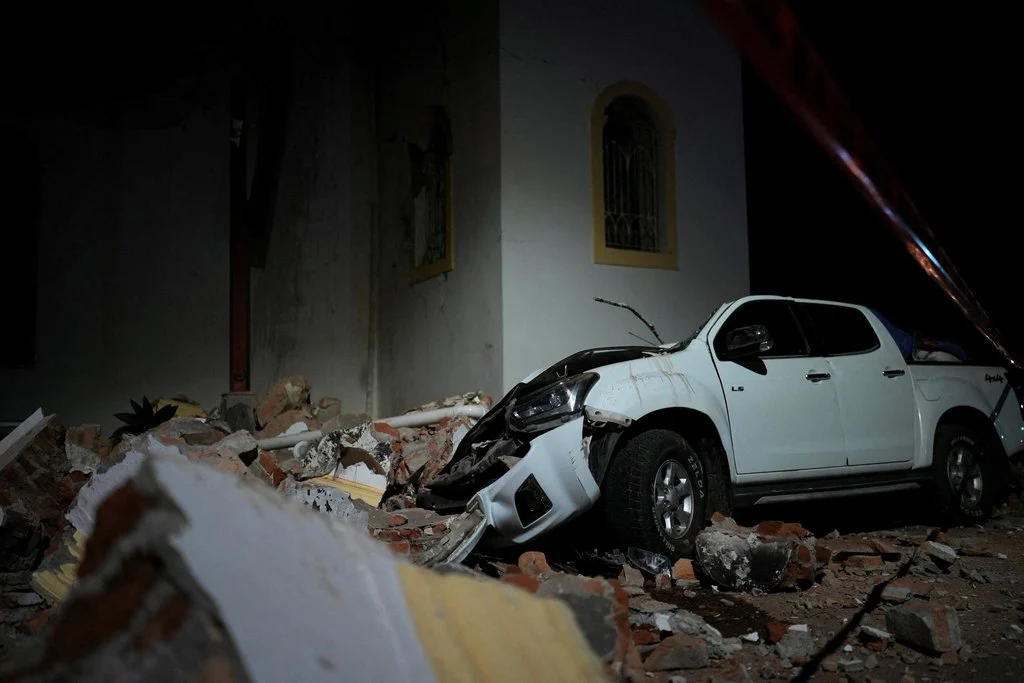
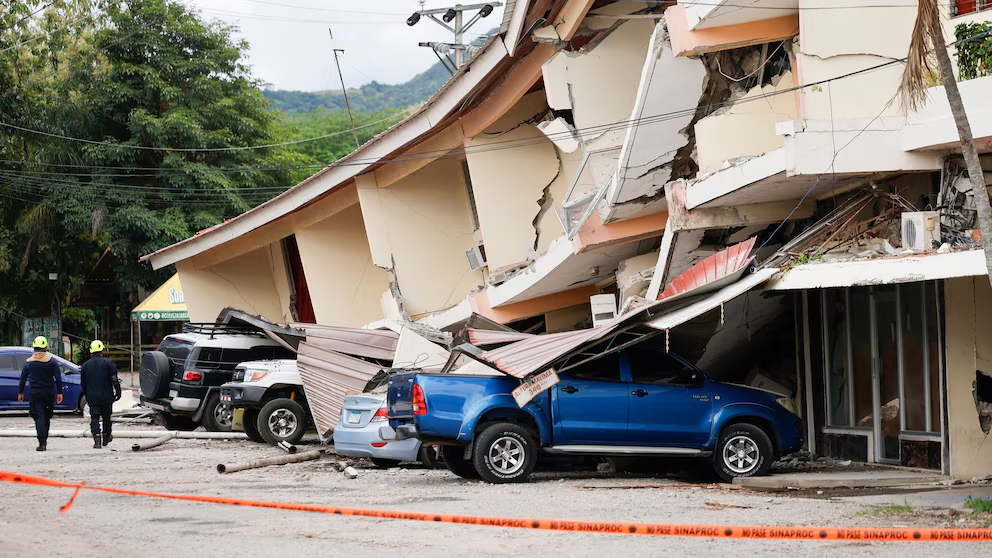
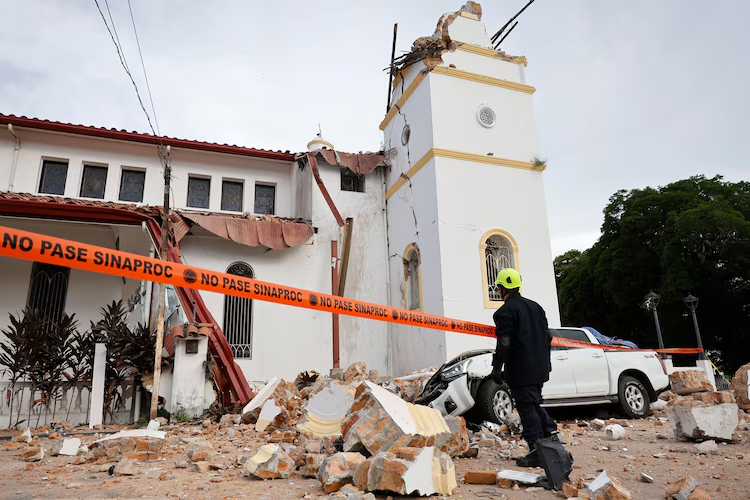
This wasn’t just a minor wobble. Striking just southwest of a small, remote community called Pitaloza Arriba, the earth ruptured at a remarkably shallow depth of about ten kilometers. Geologists note that when an event happens this close to the surface, the violent energy has nowhere to dissipate but straight up through the topsoil and bedrock. While the nearby capital city, known globally for its dense forest of modern skyscrapers engineered to withstand heavy swaying, escaped major structural damage, the surrounding central provinces took a brutal, unfiltered beating. Centuries-old masonry simply couldn’t handle the kinetic energy. A prominent tower of the San Juan Bautista Cathedral in Penonomé crumbled into dust and rubble. In a neighboring district, the Church of San Atanasio, a beautifully preserved colonial building designated as a national heritage site decades ago, simply folded in on itself.
When nature decides to remind us of its sheer dominance, it doesn’t care about borders, bank accounts, or international fame. Ricardo Brown, an elderly resident in a rural mining area, found himself trapped in a terrifying reality alongside his wife. Speaking to reporters over a shaky phone line, he described the sheer helplessness of watching the walls of his home splinter and crack. They were just two regular people, entirely unprepared, wondering if the roof they had slept under for decades was about to collapse on them in the dark. Their raw, unfiltered fear resonated across international news wires, serving as a stark reminder that when the ground gives way, everyone becomes incredibly vulnerable. It is these quiet, everyday citizens who often bear the heaviest emotional load during sudden natural disasters, far away from the cameras and the official press conferences.
Yet, while local residents were fleeing into the streets and emergency sirens wailed through the humid air, the rest of the planet was watching a very different kind of disruption unfold. This narrow strip of land is home to one of the most critical artificial waterways on Earth, a literal shortcut that dictates the flow of global commerce. Maritime authorities immediately dispatched specialized technical teams to inspect the massive concrete locks, dams, and water treatment facilities. To the profound relief of international supply chains worldwide, the canal remained completely operational. The giant steel gates held firm, and massive cargo ships continued their slow, steady march across the isthmus without missing a beat, proving the sheer resilience of modern engineering against ancient geological forces.
But the international ripple effect wasn’t limited to cargo ships and global trade. Miles away in the capital, the visiting New Zealand women’s national soccer team, affectionately known as the Football Ferns, found their meticulously planned itinerary entirely rewritten. They had traveled across the globe for a highly anticipated friendly match at a major national stadium. Instead of lacing up their cleats and facing the local squad, they were forced into strict lockdown protocols as local authorities swept the grandstands, dressing rooms, and lighting rigs for structural integrity. The opening match was swiftly scrapped, with ticket refunds promised and the team kept safe in their hotels. It is a bizarre reality of our modern world that tectonic shifts can cancel international diplomacy and global sports just as easily as they shatter old brickwork.
Panama Earthquake

Panama Earthquake
Panama Earthquake
Panama Earthquake
If the initial violent jolt was terrifying, the waiting game that followed proved to be psychologically exhausting for millions. The entire region sits squarely on the infamous Ring of Fire, a massive horseshoe-shaped fault line encircling the Pacific basin where tectonic plates constantly grind, subduct, and collide against one another. Geologists tracked dozens of smaller tremors, followed by a jarring 6.0 magnitude aftershock the very next morning that sent people running back outside. Immediate tsunami warnings flashed across screens in neighboring countries, prompting rapid coastal evacuations from Colombia all the way up to Mexico, before the ocean finally settled back into its normal, rhythmic tide.
Schools remain shuttered, highways are split open like overripe fruit, and thousands of people are still sleeping in open public parks, keeping one eye on the horizon and the other on the ground beneath their feet.
Frequently Asked Questions
What exactly is the Ring of Fire?
The Ring of Fire is a massive, horseshoe-shaped zone encircling the Pacific Ocean basin. It is characterized by constant tectonic plate movement, making it the most seismically active region on the planet, responsible for the vast majority of the world's tremors and volcanic eruptions.
Why do shallow geological events cause more surface damage?
When an event originates close to the Earth's surface, the kinetic energy does not have enough distance to dissipate through deep layers of rock. Instead, that violent energy travels directly upward, amplifying the physical shaking felt by structures and people on the ground.
Can major artificial waterways withstand violent tectonic shifts?
Modern global shipping canals are engineered with extreme resilience in mind. Built with massive concrete locks and reinforced steel gates, these critical trade routes are designed to flex and absorb kinetic energy, which is why specialized inspection teams often find them entirely operational even after severe regional events.
You Might Also Like
 Celebrity News
Nicki Minaj Shakes Up The Political Landscape With A Wild Air Force One Audition
From the campaign stage in Michigan to the conference table of Air Force One, the global rap superstar's deep dive...
 Geopolitics
The Starlink Shake-Up That Exposed Ukraine’s Satellite Dependency
After a week of throttled connections, Kyiv says Starlink and Starshield are stable again, but the episode has pushed Ukraine...
 Energy & Economy
How A Surprise Russian Fuel Deal Might Shake The Global Economy Before Midterms
Millions of tons of Russian diesel are suddenly heading to global markets after a stunning policy reversal. But with elections...