
The Starlink Shake-Up That Exposed Ukraine’s Satellite Dependency
After a week of throttled connections, Kyiv says Starlink and Starshield are stable again, but the episode has pushed Ukraine and Europe to rethink who holds the keys to battlefield communications.
A week after Ukrainian drone crews said their feeds began to stutter, Kyiv announced Saturday that Starlink and Starshield were stable again on equipment moving above 400 kilometres per hour. Defence Minister Yevhenii Khmara credited talks with Washington and President Volodymyr Zelenskyy’s diplomacy. For troops, the number mattered less than what it restored: drones, logistics, battlefield messaging and early-warning flows.
The return followed more than a week of restrictions that Ukraine said hampered operations against Russian forces. Serhiy Beskrestnov, an adviser to Zelenskyy on military technology, said SpaceX had imposed a speed limit overnight without warning, disrupting missions. Zelenskyy later said all restrictions had been lifted.
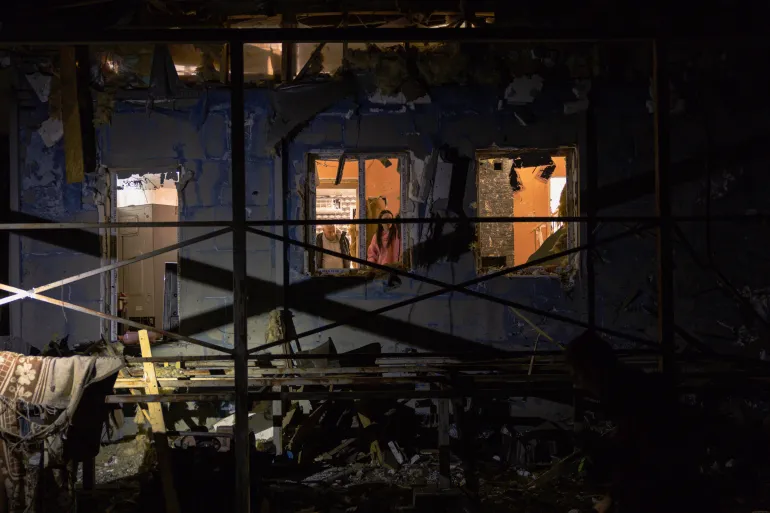
Drone warfare’s quiet dependency
Ukraine’s military depends heavily on Elon Musk’s SpaceX network for communications and drone missions. Starlink terminals provide internet where cellular towers are damaged, jammed or out of range. Starshield, the military version, is tied to US government controls, according to Ukrainian officials and SpaceX statements. That made the throttling more than a broadband issue; it touched the machinery of frontline coordination.
Lawmakers including US Representative Jason Crow have pressed for transparency. President Donald Trump denied responsibility while defending Musk and said he would speak to Musk if access was not restored. Some European officials watched the dispute as proof that allied defence communications cannot rely on one commercial provider without alternatives.
Washington, Musk and a history of requests
The episode did not emerge in a vacuum. Modern Diplomacy, citing former US officials, reported that both the Biden and Trump administrations asked SpaceX to enable or disable Starlink in different regions. Requests included limiting Iranian proxy access, enabling service in Iran and Ukraine, and seeking access in Iran after US-Israeli strikes in 2025 and 2026. The report also said Musk had previously limited Ukraine’s access and refused coverage in Crimea.
That history helps explain why Kyiv framed the restoration as diplomatic, not merely technical. Ukraine needed the signal back, and reassurance that the switch would not be moved without warning.
Kyiv looks for satellites it can own
The restrictions pushed Ukraine toward a longer-term fix. Its Defence Ministry signed a letter of intent with Finland’s Nokia and satellite maker ICEYE to explore a sovereign satellite communications system that Kyiv would own and control. The agreement was announced during the Finnish prime minister’s visit. Zelenskyy said reliable communications had become a matter of national security.
ICEYE already supplies synthetic-aperture radar imagery used by Ukraine for intelligence and planning. Nokia and ICEYE have described a model where governments own satellites, ground segments and terminals. Ukraine is also working with Norway on air-defence and communications systems that could eventually substitute for Starshield.
No drop-in replacement exists yet. Amazon’s Leo is in development, France’s Eutelsat is operating, Blue Origin’s TeraWave has not launched satellites, and the EU’s IRIS2 constellation is not expected to begin launches before 2029. Roughly $8 billion has gone into Starlink alternatives since 2022, according to Space Capital research cited in coverage, but battlefield scale remains years away.
Talks, truces and continuing strikes
The restored connection arrived as the US tries to revive negotiations. Officials from Ukraine, Russia and the US are expected to meet in Abu Dhabi in the first half of November, more than four years after Russia’s full-scale invasion began in February 2022. Kremlin spokesman Dmitry Peskov confirmed planned talks, and Zelenskyy said technical-level meetings had been agreed. Trump credited Melania Trump with helping secure a local ceasefire in Oleshky, Kherson region, set to begin October 27.
Violence continued. Ukrainian authorities said a missile strike in Lozova killed one man and wounded two, while a drone attack in Dnipropetrovsk killed at least three people and injured eight. In Donetsk region, officials reported killings in Kramatorsk and Sloviansk and dozens of injuries over 24 hours, including children among the wounded.
Ukraine said it struck targets inside Russia, including the Togliattikauchuk petrochemical plant, an Ozon warehouse in Omsk, a Proton electronics facility in Oryol and an aircraft at Yeysk air base. Russian regional authorities reported industrial damage, power cuts in Crimea and deaths at a facility in Oryol.
For now, the front line has its signal back. The harder question is who will hold the switch next time.
Frequently Asked Questions
Why were Starlink restrictions controversial in Ukraine?
Ukrainian officials said speed limits were applied without warning and affected drones and frontline communications. The decision-maker was not publicly confirmed, with Trump denying responsibility and SpaceX pointing to US control of Starshield.
What does 400 kilometres per hour mean?
Defence Minister Yevhenii Khmara said connections were stable on equipment travelling above that speed, a threshold tied to faster drones and aircraft.
Why is Ukraine working with Nokia and ICEYE?
Kyiv wants a satellite communications system it can own and control, reducing dependence on a single foreign commercial network after the throttling episode.
Are Starlink alternatives ready now?
Not at battlefield scale. IRIS2, Amazon’s Leo and Blue Origin’s TeraWave remain in development or pre-launch stages, while Eutelsat operates but does not replace Starlink directly.
You Might Also Like
 Geopolitics
The Global Shake Up From Pandemic Lockdowns To Middle East Fire – 2019 to 2026
Between 2019 and 2026, a biological anomaly triggered a chain reaction of collapsing regimes, shattered alliances, and unprecedented conflicts that...