
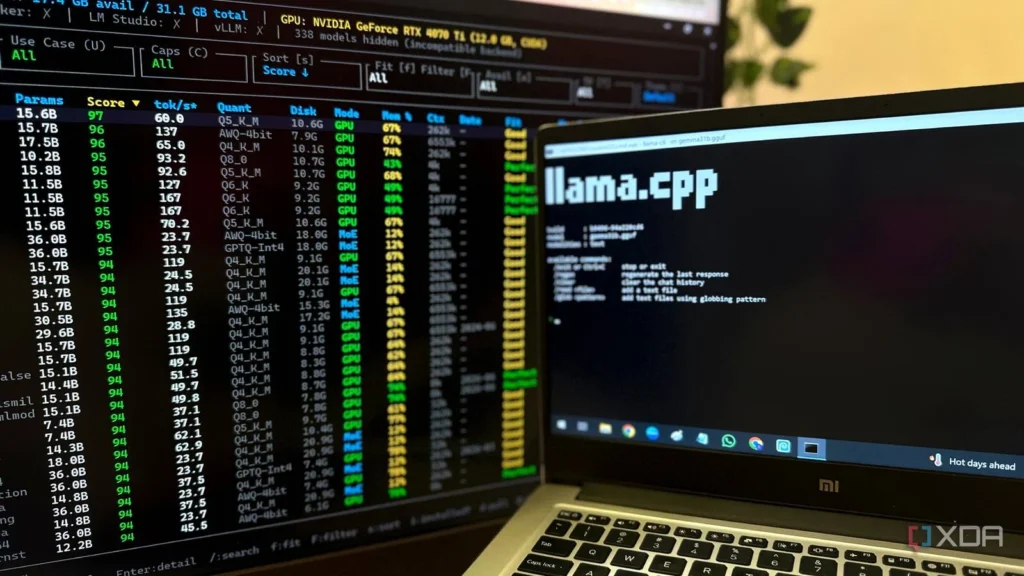
The GPU Gold Rush Died. A New One Was Born. And This Time, It’s Personal
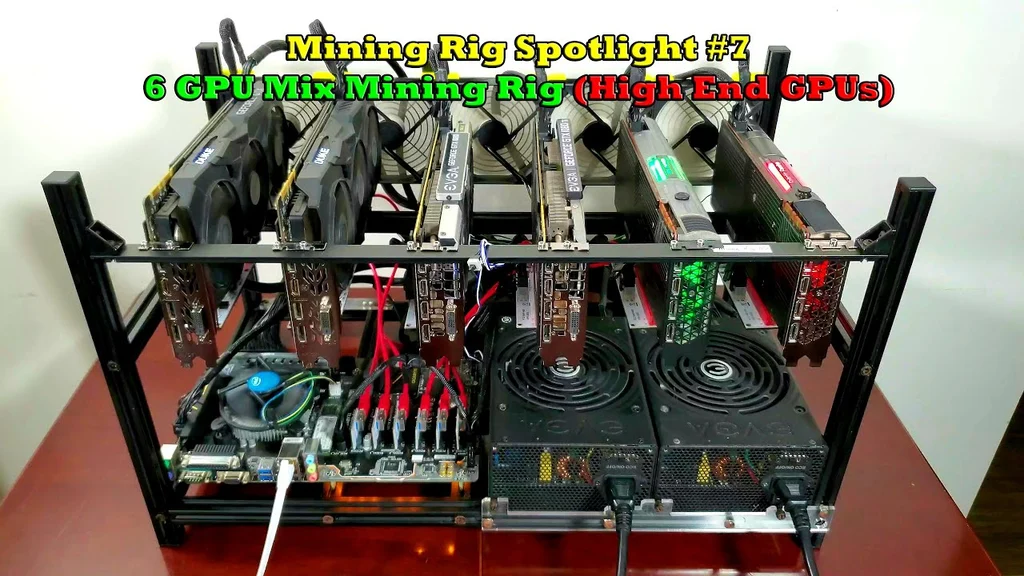
Remember 2021? Of course you do. You couldn’t buy a graphics card to save your life. Every RTX 3080, every RX 6800 XT — gone. Snatched up by mining rigs humming in someone’s garage, solving math problems to mint digital coins. Gamers were furious. Builders were locked out. The entire GPU supply chain bent to the will of Ethereum and Bitcoin.
And then, almost overnight, it stopped. The Merge happened. Ethereum went proof-of-stake. Mining became irrelevant. GPUs flooded the secondhand market. Prices cratered. People who’d paid $1,800 for a card were listing them for $600. The gold rush was over.
We exhaled. We thought the madness was done.
We were wrong.
The Same Cards. A Completely Different Hunger.
Walk into any tech forum today. Scroll through Reddit’s r/LocalLLaMA. Browse the comments under any Hugging Face model release. You’ll see the same desperation, the same scramble, the same “where the hell do I get a 24GB card without selling a kidney?” energy.
Except nobody’s mining anything.
They’re running Llama 3. They’re fine-tuning Mistral. They’re spinning up Stable Diffusion pipelines in their bedrooms. They’re building AI. Locally. On their own machines. With their own hands.
The GPU shortage didn’t end. It just changed its religion.
And here’s the thing that keeps me up at night thinking about this: the models are free. Anyone can go to Hugging Face right now, download a 70-billion-parameter language model, and run it. No subscription. No API key. No monthly bill. The intelligence is free. The hardware to run it is not.
That paradox is the defining tension of our moment.
The Irony Nobody Talks About
Let that sink in for a second.
We built the most powerful open-source AI ecosystem in human history. Researchers at Meta, Mistral, Alibaba, and dozens of smaller labs are handing away models that would have been science fiction five years ago. Models that write code, reason through logic puzzles, generate images, translate languages, summarize legal documents. And they’re free. Genuinely, actually free. Download-and-run free.
And the bottleneck isn’t the software. It isn’t the knowledge. It isn’t access.
It’s a chunk of silicon with enough memory bandwidth to feed data to tensor cores fast enough that the model doesn’t stutter like a buffering YouTube video from 2008.
The AI revolution is being gated by VRAM. By memory bandwidth. By whether you can fit 40 gigabytes of quantized weights onto a card that costs more than most people’s monthly rent.
There’s something almost poetic about it. We democratized the mind. We forgot to democratize the body it lives in.
What Actually Changed (And Why It Matters to You)
During the mining era, a GPU was a blunt instrument. You needed raw hash rate. You didn’t care about memory capacity beyond a certain point. You didn’t care about precision formats. You just needed the thing to grind. Millions of identical calculations, forever, until a coin popped out.
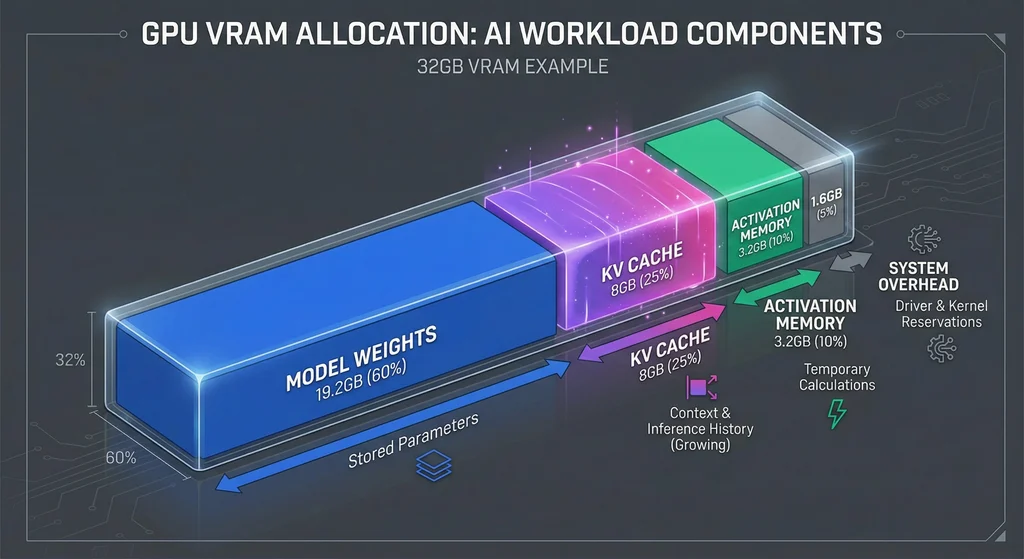
AI inference is the opposite. It’s surgical. It’s memory-hungry in a way mining never was. A 70B parameter model doesn’t need to calculate the same thing a billion times. It needs to hold 35 to 40 gigabytes of compressed knowledge in fast-access memory and stream it through compute cores token by token, word by word, like a reader scanning a page.
This is why the specs that matter shifted overnight. TFLOPS became less relevant. VRAM capacity became king. Memory bandwidth became the ceiling on how fast your AI can think. And suddenly, a used RTX 3090 with 24GB of VRAM — a card nobody wanted six months ago — became the most sought-after piece of consumer silicon on the planet.
The miners wanted throughput. The AI builders want capacity. Same hardware. Entirely different relationship to it.
The Community That Refused to Wait
Here’s what gives me genuine hope in all of this.
While NVIDIA charges $30,000 for an H100 and $40,000 for an H200, while hyperscalers hoover up every Blackwell chip before it leaves TSMC’s packaging facility, while enterprises sign 18-month procurement contracts just to get in line for datacenter GPUs —
A 22-year-old in Lagos is running a quantized Llama model on a used RTX 3060. A teacher in São Paulo is generating lesson plans with a local Mistral instance. A developer in Jakarta is fine-tuning a coding model on a single 4090 she saved up eight months to buy.
They’re not waiting for permission. They’re not waiting for enterprise budgets. They’re going to Hugging Face, downloading a GGUF file, loading it into Ollama or llama.cpp, and going.
The community figured out that you don’t need 141 gigabytes of HBM3e memory to do something meaningful. You need 12. Maybe 16. Maybe 24 if you’re ambitious. You need quantization — that clever trick of compressing a model’s weights from 16-bit precision down to 4-bit, shrinking it by 75% while keeping most of its intelligence intact. You need software like vLLM or TensorRT-LLM that squeezes every last token per second out of whatever silicon you’ve got.
The barriers are real. But the community keeps lowering them. Every week, someone posts a new optimization. A new quantization method. A new way to offload layers to system RAM without killing performance. It’s open, it’s scrappy, and it’s beautiful.
The Uncomfortable Truth About “Free” AI
I want to be honest here, because Mind on Shake isn’t about comfortable narratives.
When people say these models are “free,” they mean the weights are free. The download is free. The license is free.
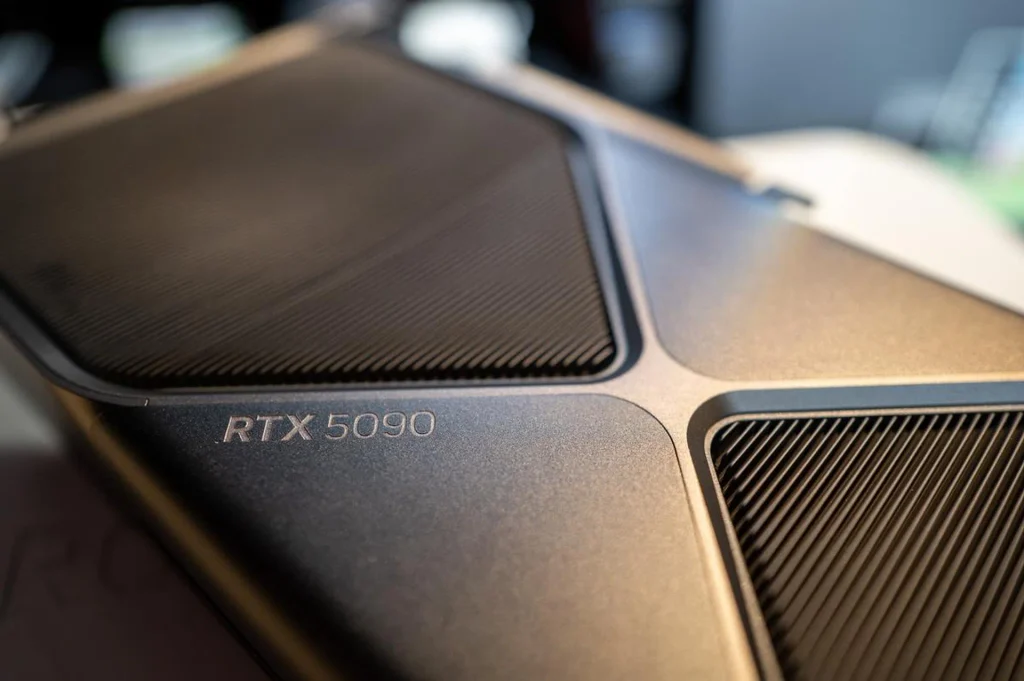
But running them isn’t free. Electricity isn’t free. A 575-watt RTX 5090 running inference for eight hours a day adds up. A 1200-watt power supply isn’t free. The $4,000 you paid for the card (because MSRP is a myth now) isn’t free. The 64GB of DDR5 RAM sitting alongside it isn’t free.
The intelligence is free. The infrastructure to experience it is not.
And that gap — between the availability of the model and the accessibility of the hardware — is where the real inequality lives. It’s not a knowledge gap anymore. It’s a silicon gap. A supply chain gap. A TSMC packaging capacity gap. A “CoWoS production can’t keep up with demand” gap.
The people building AI infrastructure at scale — the hyperscalers, the enterprises, the well-funded startups — they’ll be fine. They’ll get their Blackwell chips. They’ll get their liquid-cooled racks. They’ll sign their 18-month contracts.
The rest of us? We’ll keep refreshing eBay for used 3090s. We’ll keep checking if the RTX 5060 Ti with 16GB is back in stock. We’ll keep quantizing models down to Q4 and hoping the output quality holds.
And honestly? That’s kind of remarkable. That we can do that. That a single consumer GPU can run a model that would have required a $50 million supercomputer three years ago.
Where This Goes Next
I don’t have a crystal ball. But I have a read on the current.
The next two years will be brutal for hardware pricing. HBM supply is locked up through 2027. TSMC’s advanced packaging is oversubscribed by 40-60%. The RTX 5090’s street price won’t come down until something forces it down — and nothing on the horizon forces it down.
But the software side? The software side is exploding. Every month, inference gets more efficient. Quantization gets smarter. New architectures like Mixture-of-Experts reduce the active parameter count, meaning you don’t need to load the entire model into memory at once. Apple’s unified memory architecture on M-series chips is quietly becoming a viable alternative for local inference — silent, power-efficient, and increasingly capable.
And somewhere in a lab, someone is working on a fundamentally new approach. Optical computing. Neuromorphic chips. Something that doesn’t rely on the same memory-bandwidth bottleneck that defines today’s GPUs. It’s not here yet. But the pressure is building.
The crypto gold rush ended because the economic model collapsed. The AI gold rush won’t end the same way. Because the value isn’t speculative. It’s real. It’s useful. It’s transforming how people work, create, learn, and build.
The question isn’t whether the demand will fade. It’s whether the supply will ever catch up.
A Final Thought
There’s a moment I keep coming back to.
A few years ago, people were buying GPUs to solve arbitrary math problems for a chance at digital coins. The work was meaningless in itself. The value was entirely constructed, speculative, collective belief.
Today, people are buying the same category of hardware to run models that can write poetry, diagnose diseases from medical images, translate endangered languages, help a kid with homework at 2 AM without judgment.
Same silicon. Radically different purpose.
The GPU didn’t change. We did.
And maybe that’s the real story. Not the supply chain. Not the VRAM specs. Not the TSMC packaging bottlenecks. But the fact that humanity looked at a piece of hardware designed to render polygons in video games and said, “What if this could think?”
And then, against every economic and logistical obstacle, made it happen. In garages. In dorm rooms. In small offices in cities nobody’s ever heard of.
The gold rush didn’t die. It just found something worth mining.
You Might Also Like
 Apple Ecosystem
Apple HomeView Could Shake the Smart Home Race
Apple’s new $299 display tries to make the home screen personal, private, and hard to ignore.
 Artificial Intelligence
How Meta’s Muse Wonder Plans To Shake Up The AI Agent Market
The tech giant just dropped its most capable models yet, aiming to turn passive chatbots into proactive digital partners that...
 Artificial Intelligence
The Great Robotaxi Shake How Viral App Screenshots And A Grey Kitten Grounded The Driverless Dream
From malfunctioning butterfly doors to nocturnal felines, the reality of hailing a driverless car is being rewritten by everyday riders...